-

Language Science and Language technology in Africa
0R445,00This book provides a broad overview of current work on South African languages, language resources and language technologies. While it provides a fairly comprehensive overview, it also ties together the most recent knowledge state here, and is therefore truly innovative ? The book is therefore informed by current international trends in the respective fields of science, and feeds back into them ? There is absolutely no doubt that the book has an academic peer audience and is directed at specialists in the field. – Prof. Axel Fleisch, University of Helsinki, Finland
-
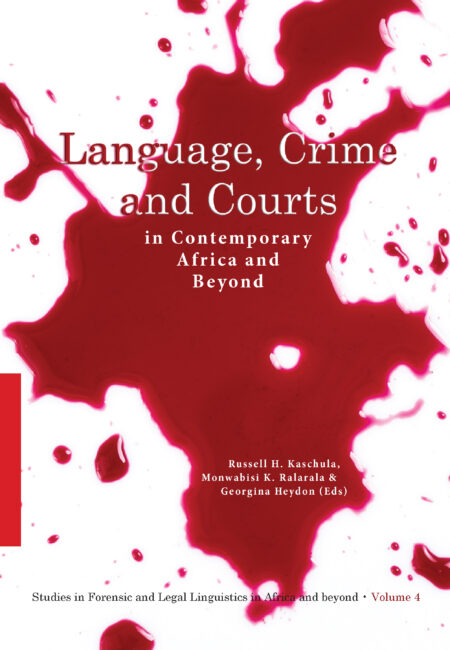
Language, Crime and Courts in Contemporary Africa and Beyond
0R375,00The research represented in this volume, and in the series as a whole, is intended to provide critical analyses and findings that can underpin the development of language policies, practice guides and other resources that support a fair and accessible legal system. However, this will also require well-developed teaching and research programmes, so it is our intention that this volume will continue to support the growth of forensic linguistics in Southern African universities and nurture the next generation of scholars dedicated to forensic and legal linguistics. This aim will be supported by the newly formed African Association of Forensic and Legal Linguists (AAFLL), which will help to coordinate the study of forensic linguistics in Africa. This book series, Studies in Forensic and Legal Linguistics in Africa and Beyond, Volumes I, II, III and IV, continues to play an important role in bringing African forensic linguistic scholarship to a wider audience, while simultaneously promoting the field amongst academic and legal institutions in Africa.
-
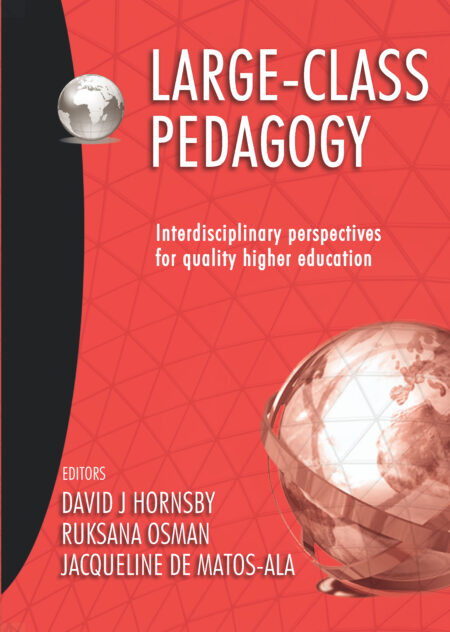
Large-class Pedagogy
0R290,00I highly recommend this edited collection. It is a timely intervention when universities around the world are facing changes akin to the newspaper industry a decade ago. The authors remind us of the potential power of the lecture and that there does not need to be a trade off between the size of the class and the quality of the delivery… Professor James Arvanitakis 2012 recipient of the Prime Minister’s Teaching and Learning Award, University of Western Sydney, Australia This is the first book of its kind that considers the complex issues of large classes. As such, it makes a very important contribution and provides a deep insight into large class pedagogy from a conceptual and practical perspective. Dr Mandia Menits Massey University, New Zealand If the thought of teaching large classes fills you with dread; if you think that pedagogic innovation is impossible in the face of burgeoning student numbers; or if you simply wish to understand more about the dynamics of this increasingly common environment in Higher Education, then this is the book for you. Written by highly experienced academics, it is a valuable (and long overdue!) resource for supporting good practice in the large class context. Dr Jenny Hadingham University of Rochester, New York
eBook: View eBook Version
-
Large-class Pedagogy
0R0,00I highly recommend this edited collection. It is a timely intervention when universities around the world are facing changes akin to the newspaper industry a decade ago. The authors remind us of the potential power of the lecture and that there does not need to be a trade off between the size of the class and the quality of the delivery… Professor James Arvanitakis 2012 recipient of the Prime Minister’s Teaching and Learning Award, University of Western Sydney, Australia This is the first book of its kind that considers the complex issues of large classes. As such, it makes a very important contribution and provides a deep insight into large class pedagogy from a conceptual and practical perspective. Dr Mandia Menits Massey University, New Zealand If the thought of teaching large classes fills you with dread; if you think that pedagogic innovation is impossible in the face of burgeoning student numbers; or if you simply wish to understand more about the dynamics of this increasingly common environment in Higher Education, then this is the book for you. Written by highly experienced academics, it is a valuable (and long overdue!) resource for supporting good practice in the large class context. Dr Jenny Hadingham University of Rochester, New York
Print: View Print Version
-

Law & Investment in Africa
0R275,00Zimbabwe has had a chaotic foreign direct investment (FDI) regime. This has created the need for a detailed volume on the most important developments around the protection and treatment of FDI, at not only a domestic level, but also at bilateral, regional and international levels. The author argues that while Zimbabwe has now harmonised, previously scattered legislation under the Zimbabwe Investment and Development Agency Act [Chapter 14:37] and taken measures to reverse (to varying degrees) controversial policies such as the land reform programme and the Indigestion and Economic Empowerment Policy, scepticism still prevails over the investor-friendliness of the FDI regime in Zimbabwe.
eBook: View eBook Version
-
Law & Investment in Africa
0R225,00Zimbabwe has had a chaotic foreign direct investment (FDI) regime. This has created the need for a detailed volume on the most important developments around the protection and treatment of FDI, at not only a domestic level, but also at bilateral, regional and international levels. The author argues that while Zimbabwe has now harmonised, previously scattered legislation under the Zimbabwe Investment and Development Agency Act [Chapter 14:37] and taken measures to reverse (to varying degrees) controversial policies such as the land reform programme and the Indigestion and Economic Empowerment Policy, scepticism still prevails over the investor-friendliness of the FDI regime in Zimbabwe.
Print: View Print Version
-
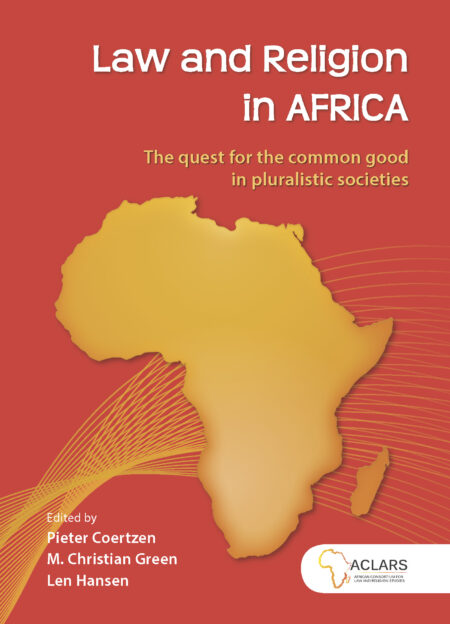
Law and Religion in Africa
0R425,00In our time the study of law and religion is emerging as a wide-ranging and vital academic discipline, with increasingly urgent implications for society at large. Lying at the intersection of a variety of other disciplines ? law, theology, religious studies, political science, sociology and anthropology, to name only the most obvious ? the field of law and religion is generating a burgeoning volume of interdisciplinary and trans-disciplinary research and study. The current volume is proof of this. The discussion of the relationship between law and religion, as seen from a variety of perspectives in Africa, underscores the critical importance of the issues involved in the everyday life of all citizens. It is accordingly vital for governments to take note of the scholarly results that are produced. We hope that this volume will contribute to this aim.
-

Law, Religion and Human Flourishing in Africa
0R525,00A shared interest of law and religion is the advancement of human flourishing, yet there is no common understanding of what it means for humans to flourish and the means by which to attain a flourishing life. The concept of human flourishing is especially important for Africa, where community and national development compete with forces of conflict and scarce resources. In the broadest sense, the concept of human flourishing focuses our attention on having a comprehensively good or worthwhile life, but various religious and legal traditions suggest different norms for measuring the quality of life and designing the institutional structures that could best facilitate and preserve it.
eBook: View eBook Version
-
Law, Religion and Human Flourishing in Africa
0R420,00A shared interest of law and religion is the advancement of human flourishing, yet there is no common understanding of what it means for humans to flourish and the means by which to attain a flourishing life. The concept of human flourishing is especially important for Africa, where community and national development compete with forces of conflict and scarce resources. In the broadest sense, the concept of human flourishing focuses our attention on having a comprehensively good or worthwhile life, but various religious and legal traditions suggest different norms for measuring the quality of life and designing the institutional structures that could best facilitate and preserve it.
Print: View Print Version
-
Law, Religion and the Environment in Africa
0R0,00This volume explores themes of ecotheology, ecofeminism, environmental pollution and degradation, climate change, human and environmental rights, sustainable development, human-animal relations through totem and taboo, sacred sites and spaces, and other environmental topics in ways that add immeasurably to the study of African environmentalisms and the interaction of law and religion. In terms of religion, the capability of humans not only to sin and destroy the earth, but also to repair and redeem it, is very much in evidence across Christianity, Islam and AfricaOs many indigenous religious and cultural traditions. In terms of law, the need for effective policies and for states and governments to work with indigenous groups and communities towards environmental solutions is also apparent.E
-

Law, Religion and the Family in Africa
0R470,00The family is a crucial site for the interaction of law and religion the world over, including Africa. In many African societies, the family is governed by a range of sources of law, including civil, constitutional, customary and religious law. International law and human rights principles have been domesticated into African legal systems, particularly to protect the rights of women and children.EReligious rites and rituals govern sexuality, marriage, divorce, child-rearing, inheritance, intergenerational relations and more in Christianity, Islam and indigenous African custom. This book examines the African family with attention to tradition and change, comparative law, the relation of parents and children to the state, indigenous religion and customary law, child marriage and child labour and migration, diaspora and displacement.
eBook: View eBook Version
-
Law, Religion and the Family in Africa
0R0,00The family is a crucial site for the interaction of law and religion the world over, including Africa. In many African societies, the family is governed by a range of sources of law, including civil, constitutional, customary and religious law. International law and human rights principles have been domesticated into African legal systems, particularly to protect the rights of women and children. Religious rites and rituals govern sexuality, marriage, divorce, child-rearing, inheritance, intergenerational relations and more in Christianity, Islam and indigenous African custom. This book examines the African family with attention to tradition and change, comparative law, the relation of parents and children to the state, indigenous religion and customary law, child marriage and child labour and migration, diaspora and displacement.
Print: View Print Version
Print: View Print Version