-

Entrepreneurship, Training, Education and Job Creation
0R215,00The papers included in this book were taken from the proceedings of the University of Johannesburg, Faculty of Management, Department of Entrepreneurship, 2010, Entre- preneurship Training, Education and Job Creation Conference. These papers address some of the issues in terms of entrepreneurship training, education and job creation.
-
Environmental Ethics
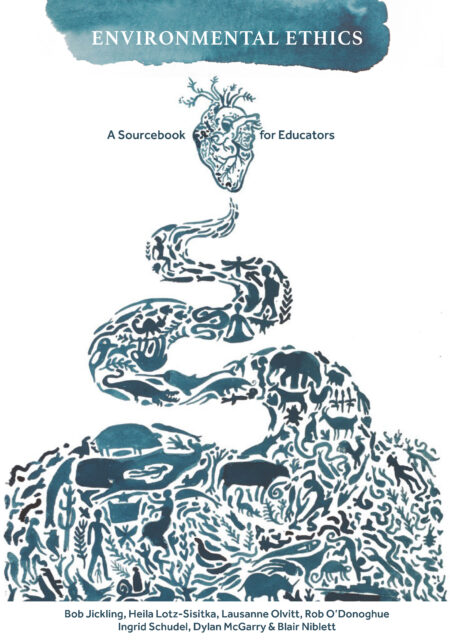
0R360,00This well-constructed, and highly original, sourcebook integrates educational materials for teaching environmental ethics with theoretical reflections. The book is set to contribute immensely to its aim of taking ethics out of philosophy departments and putting it into the streets, into villages, and on the EarthNto make ethics an everyday activity, not something left to experts and specialists. Context-based activities are presented in almost every chapter.
While it acknowledges foundational theories in environmental ethics, and the work that they continue to do, it wholeheartedly embraces a growing body of literature that emphasises contextual, process-oriented, and place-based approaches to ethical reflection, deliberation, and action. It walks on the ground and isnOt afraid to get a little dirty or to seek joy in earthly relationships. And it ultimately breaks with much Western academic tradition by framing Oethics in a storied worldO, thus making room to move beyond Euro-American perspectives in environmental issues. This work will be of interest to school teachers and other non-formal and informal educators, teacher educators, college instructors, university professors, and other professionals who wish to bring environmental ethics to the forefront of their pedagogical practices.
eBook: View eBook Version
-
Environmental Ethics
0R0,00This well-constructed, and highly original, sourcebook integrates educational materials for teaching environmental ethics with theoretical reflections. The book is set to contribute immensely to its aim of taking ethics out of philosophy departments and putting it into the streets, into villages, and on the Earth—to make ethics an everyday activity, not something left to experts and specialists. Context-based activities are presented in almost every chapter.
While it acknowledges foundational theories in environmental ethics, and the work that they continue to do, it wholeheartedly embraces a growing body of literature that emphasises contextual, process-oriented, and place-based approaches to ethical reflection, deliberation, and action. It walks on the ground and isn’t afraid to get a little dirty or to seek joy in earthly relationships. And it ultimately breaks with much Western academic tradition by framing “ethics in a storied world”, thus making room to move beyond Euro-American perspectives in environmental issues. This work will be of interest to school teachers and other non-formal and informal educators, teacher educators, college instructors, university professors, and other professionals who wish to bring environmental ethics to the forefront of their pedagogical practices.
Print: View Print Version
Print: View Print Version
-

Essays in Public Theology
0R475,00What is the role of the church in society? What role did the church play in South Africa ? during apartheid, in the struggle against apartheid and during the period of transformation? The essays collected and published in this volume deal with questions such as these. They are all occasional pieces. They were written over two decades and reflect the times in which they originated ? always intended for specific audiences, always addressing issues of the particular moment.
-
Essays on Being Reformed
0R540,00What does it mean to be Reformed Christians in the world today ? and in Africa and South Africa? What does it mean to commemorate the legacy of John Calvin (1509-1564) after 500 years ? in a modern world characterised by democracy, by popular notions of human dignity and human rights, by worldwide struggles for individual freedoms and for social justice, by a global economy in crisis ? when social historians argue about the lasting contribution of Calvin and his followers precisely with respect to all these modern phenomena?
The 28 essays by Dirkie Smit selected for this volume deal with such questions.
-

Ethical Leadership
0R240,00?Ethical Leadership and the Challenges of Moral Transformation is both challenging and timely. It is published at a critical period in the history of South Africa and the world as we face leadership challenges in the political and economic context. ?I recommend this book to anybody interested in new engagements with the real world through the art of morality.? – Prof H Russel Botman
-

Ethics and Professionalism
0R270,00Immoral, unethical conduct of politicians and public officials is a global scourge of the present day. The South African government is leading the battle against corruption in the public sector, and it must be supported by officials educated to recognise, and enabled to combat, every appearance of this pestilence. Ethics and Professionalism is essential equipment for such education. Having been constructed on the principles of knowledge progression and outcomes-based education, it sets out explaining the meaning of ethics and its importance for public officials.
-

Evaluation Landscape in Africa
0R370,00This book explores the discourse on evaluation in Africa and answers these questions: What is the purpose of evaluation in the region, based on the evaluations currently being conducted? What is the professional background of evaluators in Africa? What methods are used in evaluations in the region? What is the status of evaluation capacity development in the region? How is the quality of evaluations being conducted in Africa? The book looks at the evaluation field in its entirety. It does not focus on practice, but includes considerations for the evaluation sector that apply to evaluation commissioners, programme beneficiaries, donors, capacity builders, and the entire constellation of stakeholders working on improving development practice. It hopes to promote a data?driven approach to the evaluation sector to help strengthen engagement and practice.
eBook: View eBook Version
-
Evaluation Landscape in Africa
0R0,00This book explores the discourse on evaluation in Africa and answers these questions: What is the purpose of evaluation in the region, based on the evaluations currently being conducted? What is the professional background of evaluators in Africa? What methods are used in evaluations in the region? What is the status of evaluation capacity development in the region? How is the quality of evaluations being conducted in Africa? The book looks at the evaluation field in its entirety. It does not focus on practice, but includes considerations for the evaluation sector that apply to evaluation commissioners, programme beneficiaries, donors, capacity builders, and the entire constellation of stakeholders working on improving development practice. It hopes to promote a data’driven approach to the evaluation sector to help strengthen engagement and practice.
Print: View Print Version
-
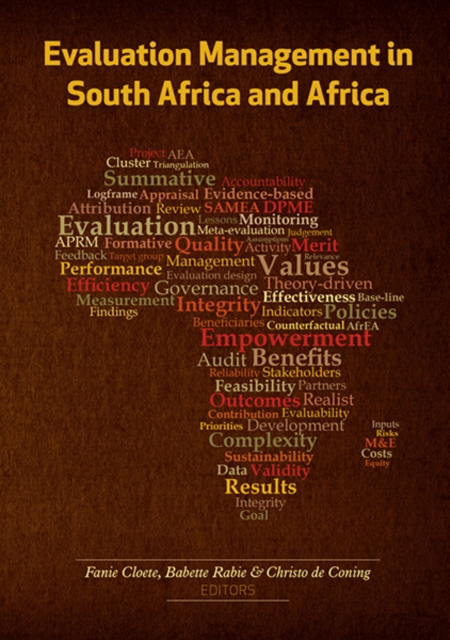
Evaluation Management in South Africa and Africa
0R665,00This blind peer reviewed book systematically records, analyses and assesses for the first time in a single volume the implications of the global development and management of professional evaluation for the African continent. The book deals with the most strategic contemporary evaluation themes. Each of these themes contains discussions of theoretical issues illustrated with one or more short case studies, while selected longer case studies and other relevant documentation are also taken up in annexures at the end of the book. The book therefore comprises a guide to best M&E practices for purposes of systematic policy, programme and project evaluations. It is suitable for both professional M&E institutionalisation and capacity-building projects as well as for evaluation information dissemination and education at different levels in the public, private and voluntary sectors in society, especially in a developmental context.
eBook: View eBook Version
-
Evaluation Management in South Africa and Africa
0R530,00This blind peer reviewed book systematically records, analyses and assesses for the first time in a single volume the implications of the global development and management of professional evaluation for the African continent.The book deals with the most strategic contemporary evaluation themes. Each of these themes contains discussions of theoretical issues illustrated with one or more short case studies, while selected longer case studies and other relevant documentation are also taken up in annexures at the end of the book. The book therefore comprises a guide to best M&E practices for purposes of systematic policy, programme and project evaluations. It is suitable for both professional M&E institutionalisation and capacity-building projects as well as for evaluation information dissemination and education at different levels in the public, private and voluntary sectors in society, especially in a developmental context.
Print: View Print Version
-

Evoking Transformation
0R645,00OThis book is especially timely and will be very influential in the acknowledgment of the importance of institutional transformation in the context of heritage in postcolonial universities in South Africa, Africa, and globally.O
Dr Mathias Alubafi Fubah
Human Sciences Research Council
OThis book is a significant contribution to Higher Education globally in doing Transformation and doing change in Institutional Culture. It is a powerful reference point and resource for transformation offices/social justice units in South Africa and globally as we continue to engage with the Hard Science of Change. Visual Redress provides insight into the specific choices made by Stellenbosch University in relation to its location and healing institutionally harmed communities. We must learn from this as we continuously engage with our praxis.O
Dr Bernadette Judith Johnson
Director: Transformation and Employment Equity Office
University of the Witwatersrand
eBook: View eBook Version