-
The Global Scholar
0R265,00In our rapidly globalising world, “the global scholar” is a key concept for reimagining the roles of academics at the nexus of the global and the local. This book critically explores the implications of the concept for understanding postgraduate studies and supervision. It uses three conceptual lenses – “horizon”, “currency” and “trajectory” – to organise the thirteen chapters, concluding with a reflection on the implications of Covid-19 for postgraduate studies and supervision. Authors bring their perspectives on the global scholar from a variety of contexts, including South Africa, Australia, the United States, the United Kingdom, Chile, Germany, Cyprus, Kenya and Israel. They explore issues around policy, research and practice, sharing a concern with the relation between the local and the global, and a passion for advancing postgraduate studies and supervision.
Print: View Print Version
-
The Governance of Transitions – The Transitions of Governance
0R315,00Why is societal transition not simply a matter of change management or normal policy design? South Africa is living proof of the ability of a society to reinvent and reinstall itself. With the advent of new societal challenges, came the need for real societal innovation, especially in sectors where it was never deemed necessary or possible before. This book asks: What type of governance is helpful for developing new societal institutions and systems that can overcome systemic crises in emerging economies and fragile communities? What emerges is a compilation of chapters that introduce different parts of a solution which can be used in developing both a growing body of practices of ‘governed’ societal transitions and the associated transition of governance. The Governance of Transitions – The Transitions of Governance, in part, aims to provide building blocks which government and society could use to develop strategies for creating sustainable outcomes. It considers what kind of leadership, organisation or methods for accountability enable new types of governance and what the most important barriers are.
Print: View Print Version
-
The Governance of Transitions – The Transitions of Governance
0R395,00Why is societal transition not simply a matter of change management or normal policy design? South Africa is living proof of the ability of a society to reinvent and reinstall itself. With the advent of new societal challenges, came the need for real societal innovation, especially in sectors where it was never deemed necessary or possible before. This book asks: What type of governance is helpful for developing new societal institutions and systems that can overcome systemic crises in emerging economies and fragile communities? What emerges is a compilation of chapters that introduce different parts of a solution which can be used in developing both a growing body of practices of governed societal transitions and the associated transition of governance. The Governance of Transitions ? The Transitions of Governance, in part, aims to provide building blocks which government and society could use to develop strategies for creating sustainable outcomes. It considers what kind of leadership, organisation or methods for accountability enable new types of governance and what the most important barriers are.
eBook: View eBook Version
-

The Grammar of isiXhosa
0R490,00Written by a life-long language practioner who has spoken isiXhosa since childhood, this grammar represents a significant advance in understanding the structure of isiXhosa, the language of more than 8 million South Africans. In this ground-breaking book isiXhosa is described in its own right, freeing it from preconceived grammatical ideas derived from European languages. All the features of the language are portrayed in this revisionist grammar that reinvents isiXhosa as a language with its own genius. All students of isiXhosa urgently need this book. Both mother-tongue speakers and those studying isiXhosa as a second or third language have to take cognisance of this new approach to escape the restrictions imposed by a Eurocentric bias. It is essential to authors of textbooks and those who prescribe syllabi. It is also of significance for those attempting to gain insight in the structure of related African languages.
eBook: View eBook Version
-
The Grammar of isiXhosa
0R390,00Written by a life-long language practioner who has spoken isiXhosa since childhood, this grammar represents a significant advance in understanding the structure of isiXhosa, the language of more than 8 million South Africans. In this ground-breaking book isiXhosa is described in its own right, freeing it from preconceived grammatical ideas derived from European languages. All the features of the language are portrayed in this revisionist grammar that reinvents isiXhosa as a language with its own genius. All students of isiXhosa urgently need this book. Both mother-tongue speakers and those studying isiXhosa as a second or third language have to take cognisance of this new approach to escape the restrictions imposed by a Eurocentric bias. It is essential to authors of textbooks and those who prescribe syllabi. It is also of significance for those attempting to gain insight in the structure of related African languages.
Print: View Print Version
-
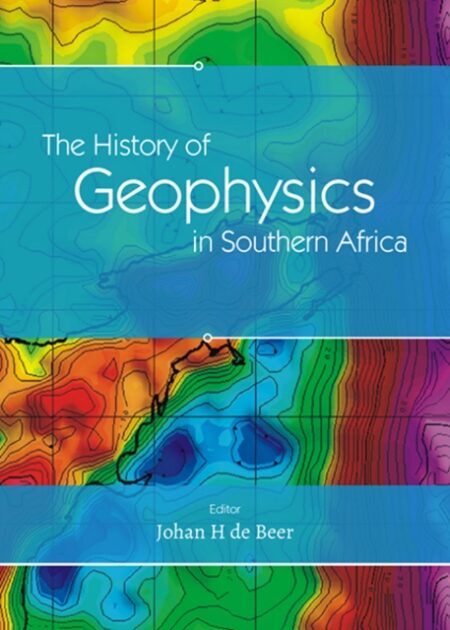
The History of Geophysics in Southern Africa
0R695,00Geophysics is a comparatively young science which only evolved as a distinct discipline during the 19th century. However, its phenomena (like earthquakes, tsunamis, volcanic eruptions and lightning) had been objects of fear, curiosity and speculation since ancient times. In this book, Johan de Beer and his research team reveal that geophysical activity in South Africa can be traced back to as early as 1488. This is a truly astonishing revelation which deserves to be firmly entrenched as part of the country’s proud history. The book also discusses the history and formation of South African geophysical institutions that made a huge and seldom acknowledged contribution to the technological development of southern Africa.
eBook: View eBook Version
-
The History of Geophysics in Southern Africa
0R550,00Geophysics is a comparatively young science which only evolved as a distinct discipline during the 19th century. However, its phenomena (like earthquakes, tsunamis, volcanic eruptions and lightning) had been objects of fear, curiosity and speculation since ancient times. In this book, Johan de Beer and his research team reveal that geophysical activity in South Africa can be traced back to as early as 1488. This is a truly astonishing revelation which deserves to be firmly entrenched as part of the country’s proud history. The book also discusses the history and formation of South African geophysical institutions that made a huge and seldom acknowledged contribution to the technological development of southern Africa.
Print: View Print Version
-
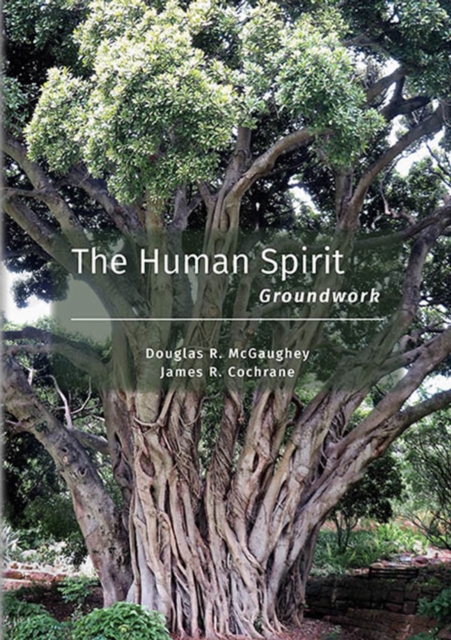
The Human Spirit
0R285,00An integrated collaborative work and a valuable source for understanding the underpinnings of the concept of spirituality that self-proclaims the audacious task of reformulating how we think about Spirit. It is about creative capacities, mind/brain, causality, free will, morality, consciousness, and beauty. In short, it is about being human.
eBook: View eBook Version
-
The Human Spirit
0R0,00An integrated collaborative work and a valuable source for understanding the underpinnings of the concept of spirituality that self-proclaims the “e;audacious”e; task of reformulating how we think about Spirit. It is about creative capacities, mind/brain, causality, free will, morality, consciousness, and beauty. In short, it is about being human.
Print: View Print Version
-
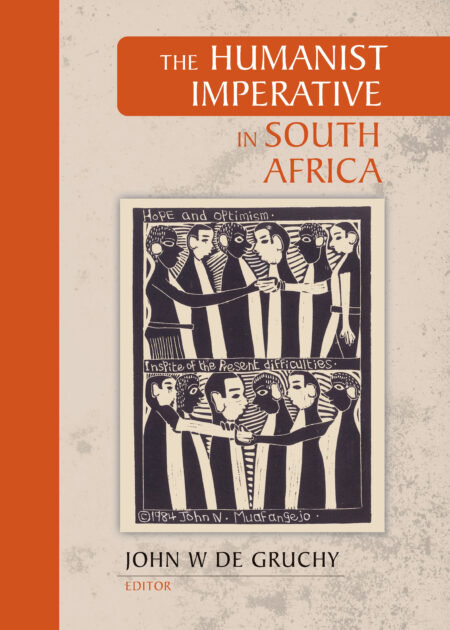
The Humanist Imperative in South Africa
0R390,00This book is an outcome of the conversation that occurred during the five days of intense discussion at two symposia initiated by the New Humanism Project.
The struggle for a more humane society is both local and universal, and increasingly these are connected in our time. So while the conversation focused specifically on South Africa, the discussion was neither parochial nor insular in its scope and character. Hopefully, then, people beyond South Africa will find the contents of this book of value for them in terms of their own contexts.
eBook: View eBook Version
-
The Humanist Imperative in South Africa
0R0,00This book is an outcome of the conversation that occurred during the five days of intense discussion at two symposia initiated by the New Humanism Project.
The struggle for a more humane society is both local and universal, and increasingly these are connected in our time. So while the conversation focused specifically on South Africa, the discussion was neither parochial nor insular in its scope and character. Hopefully, then, people beyond South Africa will find the contents of this book of value for them in terms of their own contexts.
Print: View Print Version
-
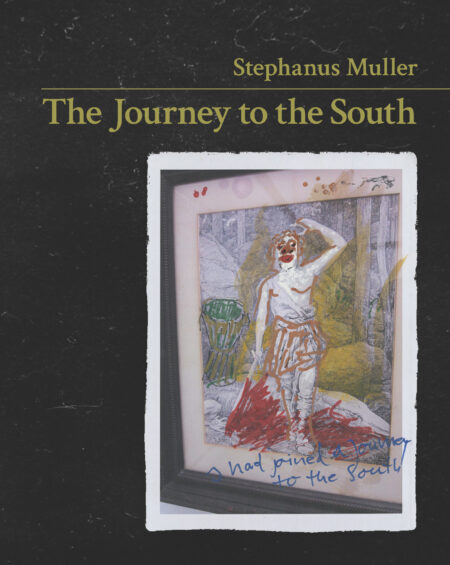
The Journey to the South
0R235,00EThe Journey to the South grapples with the entanglement of ethics, aesthetics, disciplinary transformation, institutional decolonisation and modalities of protest at South African universities. Riffing on Herman HesseOs short novel Die Morgenlandfahrt (Journey to the East), Stephanus MullerOs parable is systematically misunderstood in five different but overlapping critiques by the scholars Doctor Werner Ansbach, Proffessore Parvenu, Doctor Christian Grippenkerl, Professor Doctor Finkel Fenkel and an anarchic colloquium of shit-stirrers. Throughout the book, the art of Manfred Zylla celebrates the delirium of protest, fascist nightmares and geese in concert halls.
Print: View Print Version